
Data engineering is the discipline of building and maintaining the systems that collect, move, store, and prepare data so that it’s reliable and usable by everyone downstream – analysts, data scientists, ML models, dashboards, applications.
Think of it as plumbing for data. Raw data on its own is messy, scattered across source systems, and often unusable as-is. A data engineer builds the pipes and treatment systems that turn that raw mess into clean, trustworthy data that other people can actually work with.
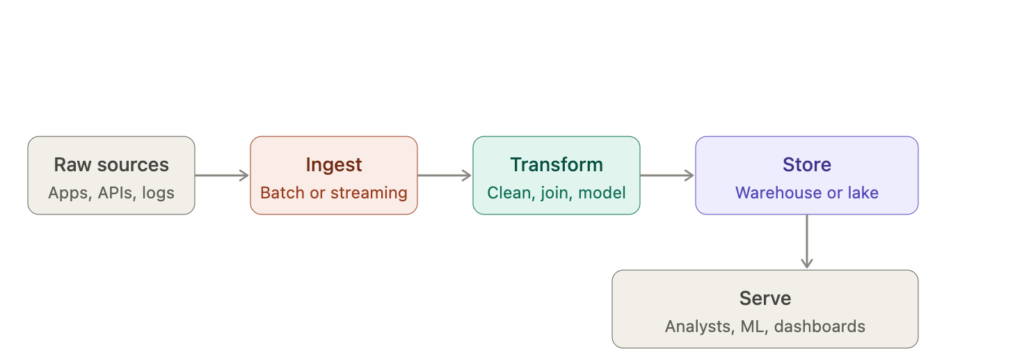
Imagine you order a pizza through a food-delivery app. Millions of things happen behind the scenes:
You place an order
       ↓
Order data is generated
       ↓
Data is collected from the app
       ↓
Data is cleaned & transformed
       ↓
Data is stored
       ↓
Data Engineer's pipelines process it
       ↓
Analysts / Data Scientists use it
       ↓
Business gets insights
For example, the company may want to know:
The Data Engineer makes sure the required data gets from the applications into systems where these questions can be answered.
In practice, a data engineer’s job breaks down into a few core responsibilities:
Without solid data engineering, everything downstream – Dashboards, ML models, Reports are is built on a shaky foundation.
Data engineering sits at the very start of the data lifecycle – the “ingest > store > transform” stages that everything else depends on.
Every other stream in the data world builds on top of what data engineering delivers:
If you’re staffing a technical team and you only hire one type of specialist first, it’s usually this one – everything else works better once the foundation is solid.
Data engineers work across a fairly consistent toolkit, though specific choices vary by company: